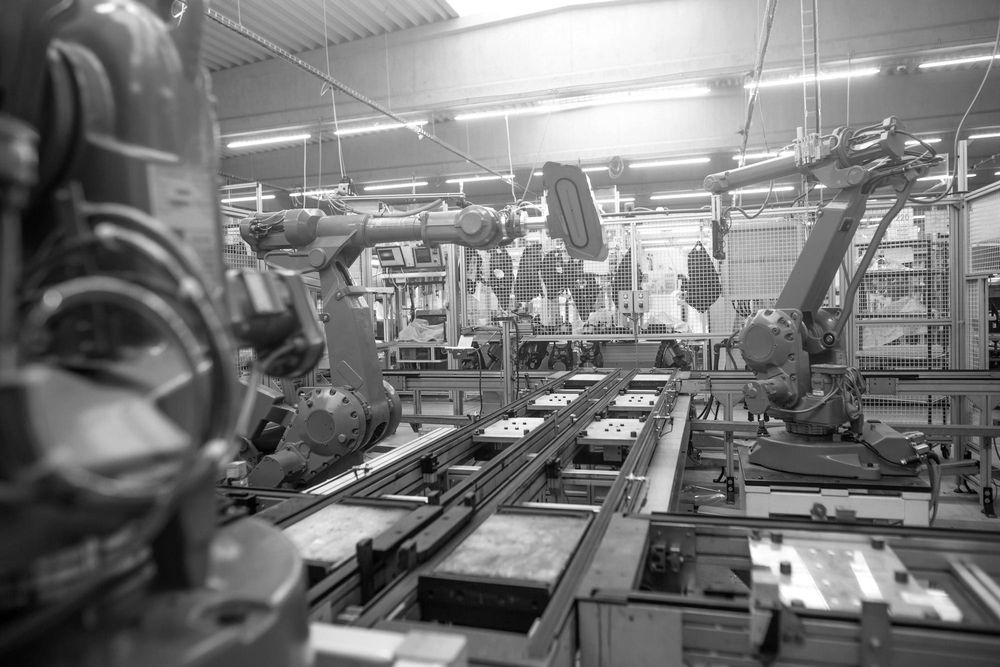
Substrate builds financing infrastructure that helps businesses purchase industrial equipment, from CNC machines and tractors to robotics. Its platform embeds financing directly into equipment sellers’ sales processes, combining a lender marketplace with AI-powered underwriting and direct lending.
America’s Broken Equipment Finance Market
Reindustrializing America will require massive deployments of new equipment. But this capital investment will not happen without economic and efficient financing. Today, the financial plumbing to make this happen is broken.
America’s equipment finance market is mispriced against the economic reality of the assets. A German manufacturer can finance a $200,000 CNC for roughly $1,667/month on a tenor (the length of time till loan or lease matures) that tracks the machine’s useful life. A US shop is quoted ~$6,139/month on a 24 to 36 month lease that assumes zero residual value and forces a buyout at the end. That delta is not about inferior operators or weaker demand, it is a financing structure that has drifted away from the asset’s actual depreciation curve.
Banking Regulation Break Equipment Finance
How we got here is structural. Rule changes made after the Great Financial Crisis destroyed the value of lease residuals on bank balance sheets. Basel II/III (global banking standards set around the 2008 crisis) treat the residual portion of a lease as 100% risk-weighted assets (RWAs) that don’t benefit from collateral recognition. This means every $1 of residual sits on a bank’s books like an unsecured loan. Add the supplementary leverage ratio (capital against total assets regardless of risk) and liquidity rules that penalize long-dated, illiquid assets, and the return on equity math for multi-year equipment leases collapses.
In practice, a bank can put the same equity dollar to work in a 20 to 50% RWA commercial loan, or in a conforming asset it can securitize efficiently, and earn higher, cleaner ROE with less operational friction. Faced with higher capital intensity after 2008, longer duration, and slower cash conversion, big banks either exited leasing or re-wrote programs to behave like full-payout loans (short tenor, no residual) to fit capital and liquidity constraints. All of this happened while US manufacturing demand was offshoring, so the problem festered out of view. Today’s reshoring push is exposing how far pricing has drifted from the underlying asset economics.
Structural Issue #1 — The Barbell Market
This has resulted in a barbell market. On one end, bank platforms (Wells Fargo Equipment Finance, US Bank Equipment Finance, BMO Equipment Finance) have the lowest cost of capital and therefore the cheapest rates, but they concentrate on clean credits and standardized collateral, and they structure deals to behave like full-payout loans. These have short tenors (often 24 to 48 months for SMBs), minimal or no residual risk, blanket liens/personal guarantees, and slow, document-heavy underwriting tied to tax returns and debt-service coverage ratios (DSCR).
On the other end are independents and private-credit lessors (CSC Leasing, Camber Road 2–3 weeks). They can move faster (even same-day approvals), will touch “story credits” and odd assets, and fund smaller tickets with flexible structures. But their higher cost of funds shows up as higher coupons and fees. Because they lack equipment data (primarily using Dun & Bradstreet, PayNet, and FICO), independents keep residuals low and tenors tighter. They are also slow to pay out to vendors. Best-in-class independents like Trio will approve same-day, payout vendors a day later, and are broad—but these are rare. In practice, customers choose between price and speed (if they can even get access). Banks are cheap but narrow and slow. Independents are broad and quick but expensive.
Then there are the OEMs’ captive finance programs. In practice, only very large OEMs run true captive finance arms. Everyone else relies on bank-backed vendor programs (and thus are subject to the constraints we have just discussed).
- $10B+ revenue: true in-house financing
- $1B+ revenue: white-label captive
- $10M+: redirects customers to third party lender network
- everyone else: only one third party lender partner or none
Below roughly $1B in OEM revenue, the $1M to $10M+ per year of costs associated with running a captive finance program (licensing, compliance, servicing, collections, treasury, analytics) and the capital required to hold receivables (10% equity against assets) is not economically viable. Brands like Haas, FANUC, Mazak, and TRUMPF typically partner with Wells/US Bank, etc., under their own label. A few $1-3B revenue OEMs run “hybrid captives,” taking limited residual exposure (agreeing to buy back the equipment at a set value or sharing in resale proceeds) and funding via warehouse lines. Full captives (like John Deere Financial, Caterpillar Financial) usually appear once an OEM is originating ≥$1B/year and can sustain a $2B to $10B receivables book and periodic asset backed security (ABS) issuances (~$300–500M per deal).
Thus most OEMs do not have captive programs and the few that do are backed by banks or specialty lessors rather than true balance-sheet lenders. Independents and fintech front-ends (QuickFi, Vero) move faster, but their underwriting is largely borrower-centric and term-limited to match their cost of funds and lack of machine data. None of these actors price the machine with sufficient asset-level granularity whether due to regulatory constraints (bank balance sheets) or lack of data (independents). This leads to the second structural challenge with equipment finance.
Structural Issue #2 — The Heterogeneity of Equipment
Financing benefits from standardizing. This is why you can throw a stone and hit fast/easy solar panel financing. Solar panels come in standard units and provide a predictable commodity output. But industrial equipment is anything but standard. Take CNCs machines as just one example …
Haas, the US leader, has 20 core CNC models. There are ~4,000 possible factory builds once you layer in travel-envelope sizes, spindle and automation packages, rotary options, probing software, and tool-changer capacities. Each configuration cuts different materials at different speeds, holds value differently as technology advances, and earns wildly different cash flows for the shop that runs it. There is no “standard unit of production” analogous to a kilowatt-hour. Different companies produce different goods with different economics with these machines. Finally, Haas is not the only player in the CNC market, there are a dozen credible CNC OEMs. This is a combinatorial explosion.
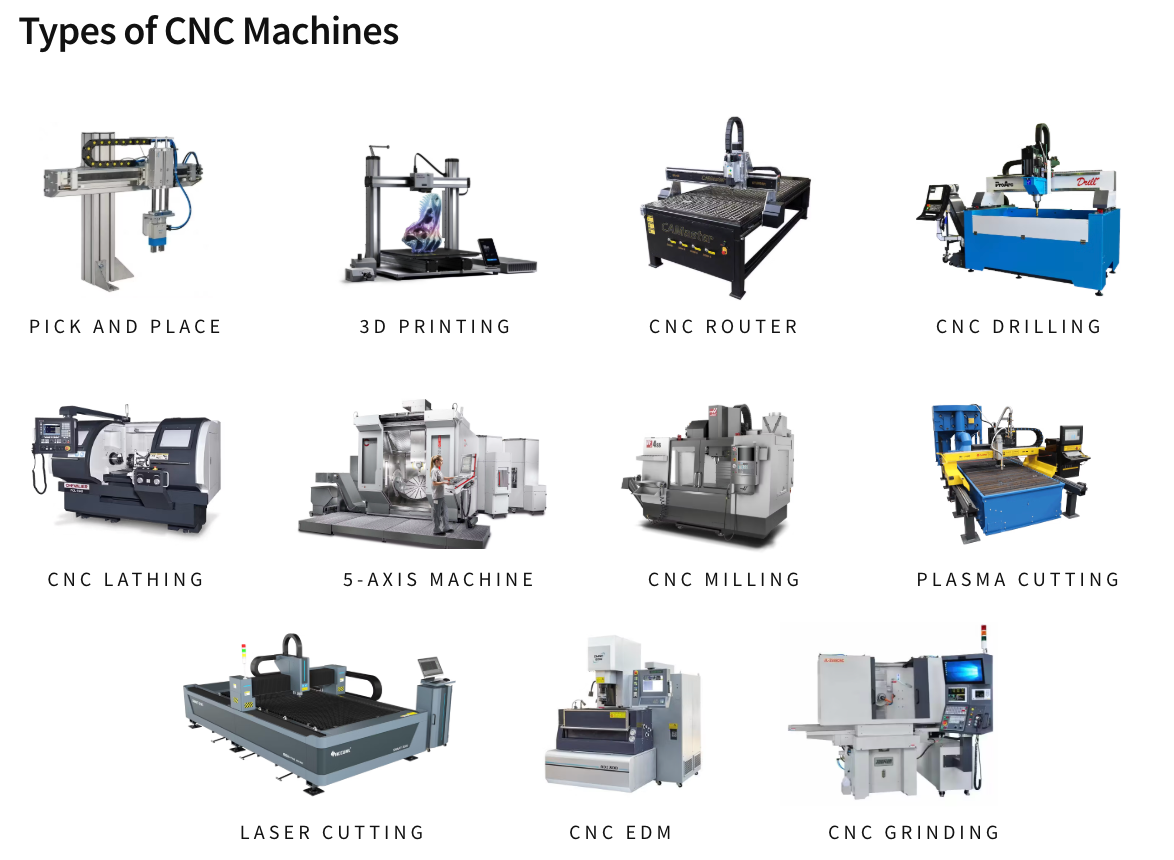
To be effective, lenders should underwrite asset value, utilization, and resale value machine by machine. But, outside of the largest OEM’s captive finance programs, they can’t. They just lack the data. Furthermore even if you did have the requisite data on machine level economics / performance / service records, the combinatorial exploration destroys any scale economics in equipment finance because, traditionally, underwriting more equipment types would require more people. On its own, ~$10B in CNC machines are sold in the US each year. But this is a small fraction of the overall equipment market.
You don’t want to hire more people to underwrite more types of equipment that on their own have relatively small volumes. This forces financiers to underwrite the borrower and not the machine. In short, the very diversity that makes CNC equipment versatile and valuable for the variety manufacturers, makes it a nightmare for traditional asset-backed lending.
What Stakeholders Actually Want
Simply put, both vendors and equipment buyers would prefer financing that understands the asset itself (utilization, residual value, remarketing path), not just the borrower’s FICO and tax returns.
For vendors/OEMs, a sale is often a financing problem. Their priority stack is: (1) higher win rates and shorter sales cycles with “instant” approvals, (2) bigger baskets (automation packages, tooling, software, service contracts) attached to the same transaction, (3) reliable funding within days, not weeks, (4) minimal operational lift (ie no building a captive, no collections/servicing burden); and (5) better installed-base intelligence (telemetry and residual feedback) to inform pricing and new-model roadmaps. Basically, OEMs want to offer captive finance programs without the overhead.
For equipment buyers (especially SMBs that cannot access term loans from banks) the priority stack is equally clear: (1) lowest all-in cost (rate + fees + buyout) with a tenor that tracks economics, (2) speed and certainty to “yes/funded”, (3) life-cycle coverage (delivery, install, service, insurance, and an assured resale/return path), (4) minimal paperwork integrated with their ERP/accounting, and (5) ideally one counterparty across multiple OEM brands.
The Opportunity
Reshoring and AI-enabled automation are colliding to drive domestic industrial equipment demand. This wave is crashing into a financing stack whose structure cannot economically underwrite equipment whether due to lack of data or regulatory constraints and thus cannot meet the needs of vendors and buyers. This is the opening for a new financing layer (a new “substrate”).
To succeed, this layer needs (1) the data access of an OEM, (2) the independence of a non-bank lender, and (3) a cost structure that does not scale with the heterogeneity of equipment types. We believe this layer would give vendors and equipment buyers what they actually want and set the stage for even bigger opportunity, becoming the physical substrate for the full lifecycle of industrial equipment in America.
Substrate — The New Equipment Finance Layer
This is precisely what Kelvin Yu (CEO & Founder) is building with Substrate. The market needs a financing layer with the data access of an OEM, the independence of a non-bank lender, and a cost structure that does not scale with the heterogeneity of equipment types.
The buyer-facing surface is a clean, vendor-branded portal. A single five-minute application replaces the stack of PDFs, the tax returns over email, and the SSNs sent to a sales rep's inbox. The buyer fills it out once. Behind that portal, more than 30 lenders compete for the deal across ticket sizes from $5,000 to $5 million, terms from 24 to 72 months, A through D credit, new and used equipment. Multiple offers come back inside 24 hours. Vendors can onboard their existing lender relationships and set their own waterfall logic, so the platform expands the set of capital partners rather than replacing them. Personally Identifiable Information never touches the vendor's servers, which eliminates the compliance and liability surface that has historically prevented mid-market industrial vendors from running real financing programs at all.
Substrate approves roughly 95% of customers, returns decisions in less than a day, and pays vendors 100% upfront on signing rather than waiting for the buyer's first payment. OEMs see 30% more closed sales and up to 8x faster close rates. Vendors earn up to 40% revenue share on financing margin, turning what was historically a deal given away to a third-party broker into a recurring revenue line. Setup takes 5 minutes. The platform is available everywhere the vendor sells: native checkout integrations via API or code snippet, generated application links inside emails and texts, and embedded monthly payment options inside quotes and invoices. The seven vendor archetypes Substrate supports cover essentially the entire industrial sales surface: OEMs running direct and dealer programs, dealers, distributors, system integrators, auctions, marketplaces and liquidators, and international OEMs entering the US market.
The architecture matters more than the product copy. Substrate sits inside the OEM rather than next to it. That position gives Substrate something no independent has and no bank can hold profitably: machine-level data at the configuration level, telemetry, service history, and resale outcomes for the exact serial numbers it is underwriting. That data flows into an AI-enabled underwriting system that prices residual value, utilization, and remarketing path machine by machine. The result is underwriting that is more accurate than independents and more flexible than bank-backed products, with a cost structure that does not scale with the heterogeneity of equipment types.
This is the structural feature that compounds over time. Every additional equipment category Substrate covers adds customers without adding proportional headcount. The fixed cost of model development and platform infrastructure amortizes across more OEMs, more buyers, and more transactions. As coverage expands, more buyers consolidate their multi-OEM equipment financing onto a single platform rather than juggling Haas Financial for mills, FANUC for robotics, and an independent for everything else. The combination of widening data moat and broadening distribution favors a single dominant player over a fragmented field of independents and one-off captives. Substrate is built to be that player.
Substrate is not building a captive for one brand. Substrate is building the captive layer that every brand below the John Deeres and Caterpillars of the world can plug into in 20 minutes, and that the larger brands can use to lower the operating cost of the captives they already run.